
Design courses are evidently too practical for a place like Oberlin (where I was an English major and also studied art and photography), so I had to learn the particulars of graphic design on the fly. Fortunately, I could apprentice myself to the design and publications staff at the Cleveland Museum of Art. They were good teachers and I was promoted to head up a newly configured department of creative services in 2008, overseeing the museum’s brand expression, and in that role led a project to update the museum’s graphic identity and developed the museum’s first comprehensive brand guide. Our team presented numerous AIGA workshops and sat on panels for the Cleveland chapter of that national design organization. For many years, we all volunteered to serve at the AIGA’s annual portfolio review day, offering feedback to up-and-coming designers. I concluded my career at the Cleveland Museum of Art in April 2021 after more than 30 years at the museum.
In the late 1990s, partly in the search for a more substantial means of understanding how the museum served its public than the self-validating strategies of marketing could provide, I went to graduate school for urban planning and design and earned a Master of Science degree with a focus on design and aesthetic experience, through the Levin College of Urban Affairs at Cleveland State University—the things I learned along the way have enriched the full range of my activity.
Outside of my museum work, I co-founded and designed the award-winning Heights Observer community newspaper in 2008; the design template is still in use today by its current design team. I have designed a few logos and identity systems including, most notably, that of Heights Arts.
My recent freelance design and editorial client list includes ARTneo, the Cleveland Museum of Art, the Cleveland Orchestra, Heights Arts, the Heights Observer, Ital Cycling, Don Julien for Foothill Galleries, Thomas Morris, R-Eval, the United Way of Greater Cleveland, and Rose Iron Works.
I especially enjoy designing books and have done an interesting variety of them for the museum and for numerous clients, from fiction and nonfiction titles, to large-format art and photo books, to dozens of monographs designed to accompany exhibitions. The fee I charge to design a book varies with length and complexity and with the number, character, and size of images. The cheapest thing to design is a simple novel or short monograph—as little as a couple hundred dollars. Complex nonfiction books with lots of footnotes, callouts, chapter headers, and illustrations, plus table of contents, bibliography, and maybe an index, on the other hand, can easily cost five or ten times what the simple novel of similar page count would. Photo and art books are usually somewhere between, depending on the amount and nature of image work required—partially because images consume a lot of computer storage space and processing horsepower, and partially because working on them requires specific expertise. These days, there are many options for printing, including conventional offset lithography or digital output using local printers in Cleveland to print-on-demand vendors that will also distribute your book, such as Amazon/KDP and IngramSpark or Blurb. I can set up reflowable ebook versions of certain kinds of books as well. And I'm happy to consult with authors or artists who wish to create their own books and might just need a few pointers. If you're interested in doing a book and possibly having me design it or help you, send me a note at info@gmdonley.com.
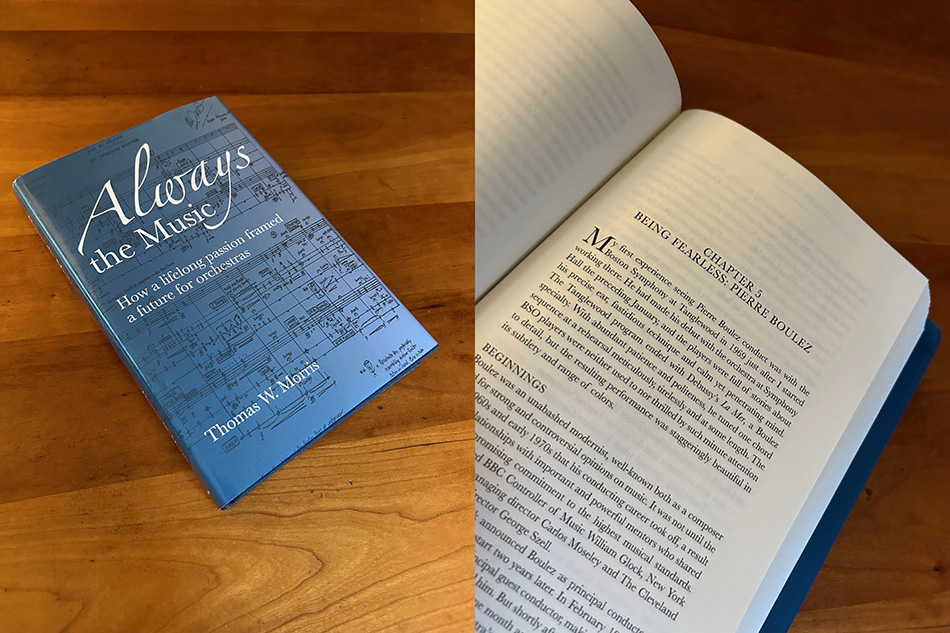
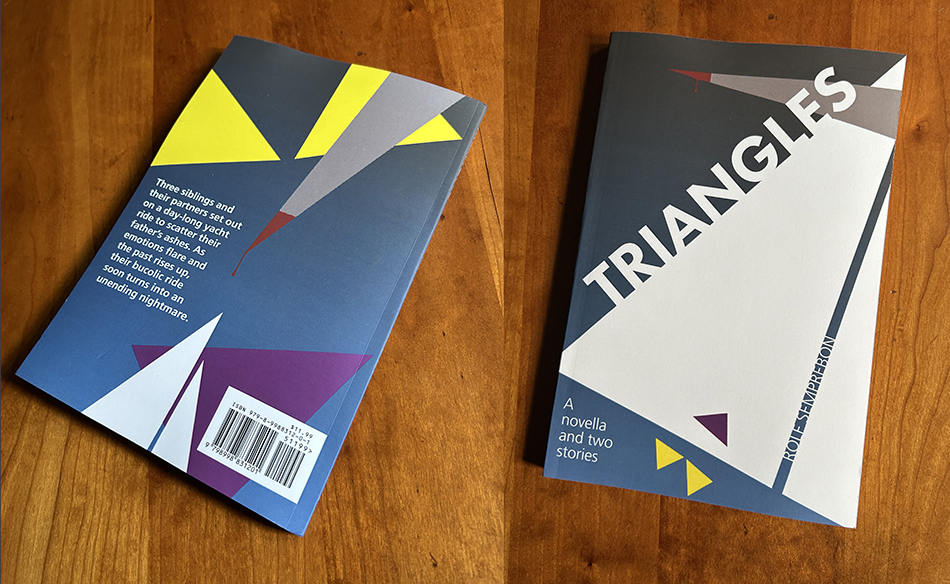

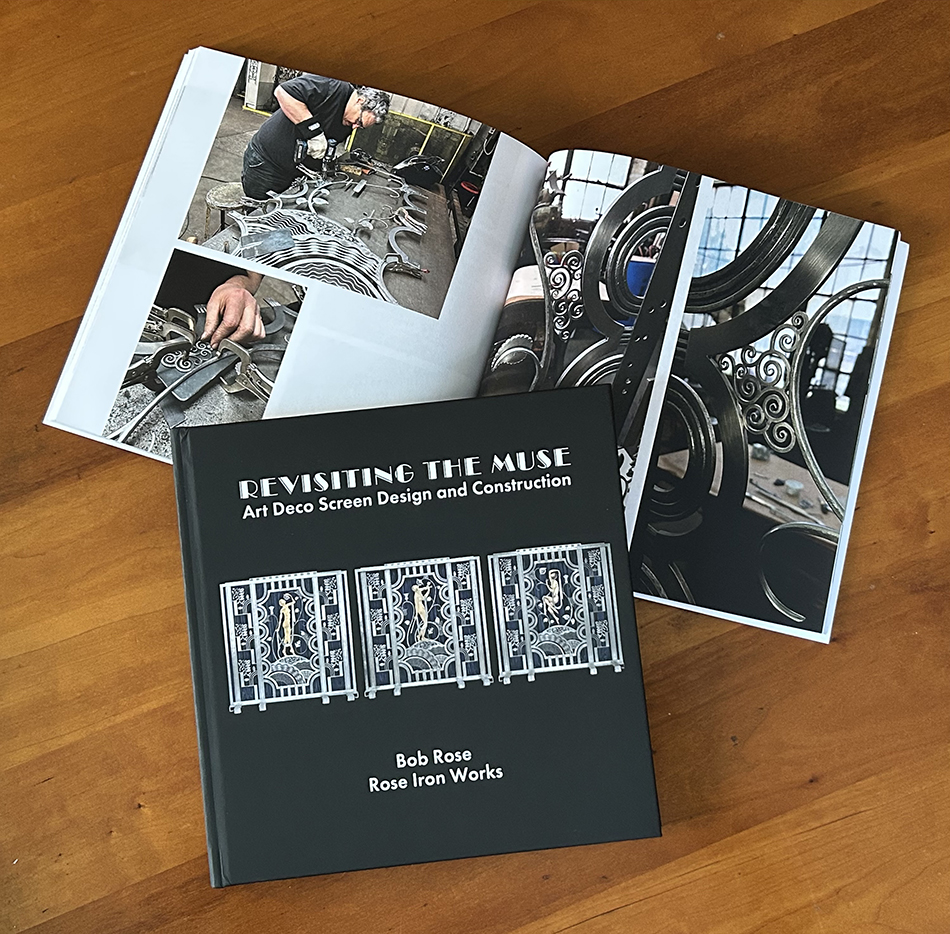
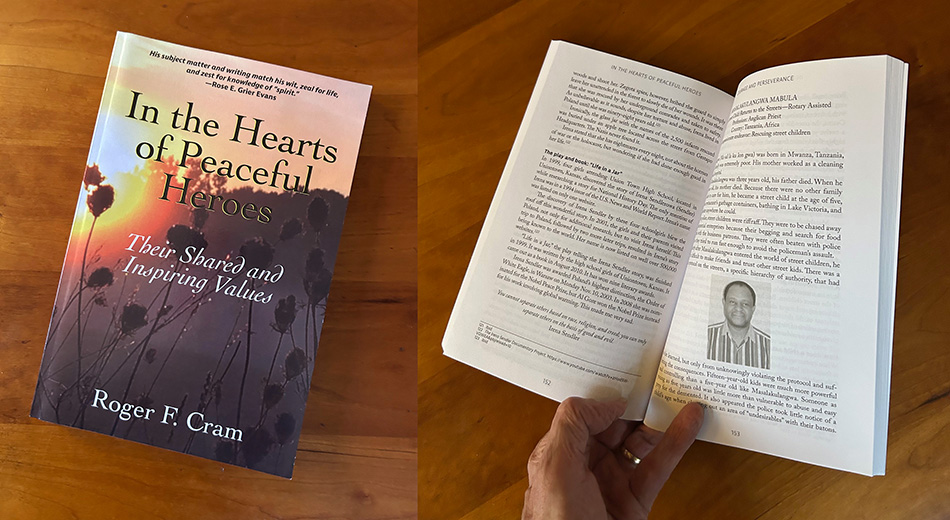


Recent freelance work includes designing Always the Music, a book by Tom Morris about his life in music including being executive director of the Cleveland Orchestra and the Boston Symphony; Revisting the Muse, an account by Bob Rose, third-generation owner of the venerable Cleveland metalworking firm Rose Iron Works, about one masterpiece made in 1930 and the subsequent creation of two more variations nearly 100 years later; the cover and interior design for Rolf Semprebon's Triangles; Strange and Lonely Spaces, a book accompanying an exhibition about Magical Realist painting in Cleveland at ARTneo in Cleveland (2021); Roger Cram's book In the Hearts of Peaceful Heroes in which he profiles notable "heroes of peace" and examines their shared values (2022); a catalogue for the exhibition The Other Side of 8 at Foothill Galleries in Cleveland Heights (2022), and my own suite of books as part of my Miscagon publishing project. An interesting mid-2000s project was a suite of CD packages for recordings by organist Karel Paukert.

The Heights Arts logo has found its way into many applications. The organization (of which I was a founding board member and two-time president) covers visual, musical, and literary art forms, a situation that presents interesting design opportunities such as this book pairing poems and photographs inspired by the Coventry district in Cleveland Heights.

As chair of the Heights Arts Exhibition Community Team (earlier known as the Gallery Committee) for many years, I have worked on the planning, design, and installation of dozens of shows.
 I was founding co-designer and editor with Laurence Channing of the museum's magazine in 1995 and its sole designer and managing editor from 2002 to 2021, publishing more than 200 issues. A key to its enduring success was the process for developing content that we devised with museum director Robert Bergman, who thrived on a certain amount of chaos: editorial planning meetings several times a year for which I would convene a roomful of curators, educators, and other key staff who might potentially write articles and we would brainstorm ideas and work out a schedule on the spot, which would be confirmed right there by the director, who always attended. Everyone who needed to have a say was in the room. There was a lot of energy and I am certain we regularly came up with better editorial plans because all the bouncing ideas and learning what other people were up to would inspire people to come up with innovative article proposals. Because decisions were made right there with the participation the director, we would leave the meeting having accomplished a lot and knowing what our assignments were for the next few months. People often said it was their favorite meeting (a phrase many might call an oxymoron)!
 Among many ventures, my "creative services" department developed a coordinated graphic program for all the materials visitors might pick up in racks in the galleries, with a palette of colors sampled from works of art in the Cleveland collection.
 The museum produced traditional printed annual reports for many decades until the emergence of digital options allowed us to produce the "old style" report electronically while developing new print publications focused on specific areas of activity such as community engagement and building the art collection. Cleveland's ample resources for high-quality printing made it possible to print many publications locally and to personally oversee the press runs. I developed many publications and products for the museum store as well, including note cards, shopping bags, many poster designs, and publications such as this picture book from 2014, a collaboration with photographers Jennie Jones and Stuart Pearl, that celebrated the completion of our ambitious renovation and expansion project.
 We were always looking for innovative ways to make scholarship more affordable and less intimidating. I worked with our curator of contemporary art to develop a series of unobtrusive but visually engaging pamphlets that allowed us to seriously discuss small installations that deserved attention but would never get a big hardcover catalogue.
 And of course a major art museum cranks out zillions of events, many of which would get an invitation or program--each a great opportunity to make a cool design.
Working for an art museum must be one of the best jobs a designer can have, because most of the visual material has already been pre-selected as world-class artistic production worthy of being in a place like the Cleveland Museum of Art. It would be a privilege to design one issue of a museum magazine; I designed a couple hundred of them, most cover-to-cover. It's almost embarassing: I got to design so many cool things over the years I stopped even saving samples.
Contact: info@gmdonley.com